Dover Vigilantes Warn of Return if Police Fail to Act
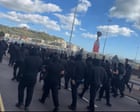
Masked Protesters Threaten Further Disruption in Dover
Dover vigilantes dressed in black attire and face coverings have issued warnings of potential repeat demonstrations should law enforcement fail to intensify preventive measures. The group responsible for the recent road blockade at the port has signaled their readiness to mobilize again, creating heightened concerns among local authorities and elected officials about maintaining public order in the coastal town.
The masked protesters who orchestrated the Dover incident represent a coordinated movement capable of mobilizing significant numbers rapidly. Their demonstration highlighted gaps in operational readiness and prompted urgent discussions among police leadership regarding crowd management protocols and advance intelligence gathering capabilities.
Patriot Platform and Extremist Connections
The organization claiming responsibility for the Dover blockade identifies itself as Patriot Platform, describing its mission through nationalist rhetoric emphasizing what it terms a "fierce love for our homeland." Security analysts and civil rights organizations have documented connections between Patriot Platform and broader far-right networks operating across the region.
According to observations from monitoring groups, Patriot Platform has successfully leveraged social media platforms and encrypted communication channels to coordinate simultaneous actions across multiple locations. Their ability to organize large-scale demonstrations despite minimal prior public awareness suggests sophisticated operational planning and well-established recruitment infrastructure.
Political and Advocacy Responses
Hope Not Hate, a prominent civil rights organization tracking extremist movements, has attributed the group's capacity for rapid mobilization directly to perceived police inaction. The organization's leadership emphasized that without decisive law enforcement intervention, far-right linked groups perceive opportunities to expand their operational footprint and influence.
Local politicians have expressed frustration regarding the perceived slowness of official responses to the initial Dover blockade. Several MPs have called for dedicated task forces focused on monitoring and preempting future demonstrations by anti-immigration groups. Campaigners argue that early intervention strategies could effectively deter repeat actions before mobilization reaches critical mass.
Police Accountability and Prevention Strategy
Law enforcement agencies face mounting pressure to demonstrate proactive engagement with emerging threats. The Dover incident exposed coordination capabilities previously underestimated by intelligence analysts. Police departments now acknowledge they must enhance surveillance of far-right communication networks and improve information-sharing protocols with partner agencies.
Experts emphasize that addressing the underlying grievances driving recruitment into anti-immigration movements requires comprehensive community engagement strategies alongside enforcement actions. However, immediate security concerns necessitate robust police preparations for potential future demonstrations.
Community Impact and Concerns
The Dover blockade disrupted port operations and created significant economic losses for businesses dependent on unrestricted access to the crossing. Residents expressed concerns about escalating tensions between anti-immigration activists and local communities. The demonstration highlighted vulnerabilities in critical infrastructure protection and emergency response coordination.
Local business leaders have urged government officials to prioritize preventing recurrence of the disruption. The port of Dover serves as a vital transportation hub for the Southeast region, and any extended blockade poses substantial risks to supply chain operations and economic stability.
Moving Forward: Prevention and Deterrence
Preventing future Dover vigilante demonstrations requires multifaceted approaches combining intelligence gathering, community monitoring, and rapid response capabilities. Authorities must balance civil liberties protections with security imperatives to disrupt planned actions before they materialize.
Campaigners and law enforcement agencies acknowledge that the current trajectory favors activist groups capable of organizing without adequate preventive measures. Without accelerated police action and enhanced deterrence mechanisms, warnings from advocacy organizations suggest that masked protesters may indeed return to Dover with escalated tactics and broader participation levels, potentially triggering larger-scale disruptions affecting regional stability.