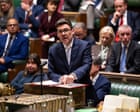
Business Secretary Signals Starmer's Imminent Resignation

Business Secretary Signals Starmer's Imminent Resignation
Keir Starmer's tenure as Prime Minister appears to be drawing to a dramatic close, with the Business Secretary making statements that suggest the end is near. Peter Kyle's recent appearances on Sunday television programs conveyed an unmistakable message: the leadership transition would likely occur by Monday. The apparent inevitability of Starmer's departure marks another chapter in Britain's increasingly turbulent political landscape.
Weekend Shift in Political Sentiment
The situation surrounding Keir Starmer underwent a significant transformation over the weekend. Following statements on Friday that suggested a continued commitment to his position, reports emerged late Saturday indicating that Starmer was preparing to announce his resignation on Monday. This reversal reflected a dramatic shift in circumstances that had apparently become clear to the Prime Minister and his inner circle.
The change in trajectory suggests that Starmer may have utilized time at Chequers for reflection and consultation with family members, ultimately leading to the conclusion that his political future had reached its endpoint. Notably, even loyalists within his camp refrained from publicly contesting the resignation reports, a telling silence that underscored the apparent acceptance of the inevitable outcome.
Britain's Revolving Door Leadership Crisis
The anticipated resignation of Keir Starmer would make him yet another casualty in an extraordinary period of political upheaval. By summer's end, the United Kingdom will have cycled through its seventh prime minister in a single decade. This unprecedented turnover represents a dramatic shift from historical precedent and raises serious questions about governmental stability and continuity.
The frequency of leadership changes has become a defining characteristic of contemporary British politics. The nation that once regarded Italian political instability with bemused detachment now faces a comparable crisis itself. Italy's reputation for regularly replacing its leaders has become, ironically, a model of consistency compared to current British circumstances.
The Cenotaph Line Grows Ever Longer
With each successive resignation or electoral defeat, the roster of former prime ministers expands. The traditional Remembrance Sunday parade at the Cenotaph faces an increasingly crowded line of predecessors—those beloved by their supporters, those who faced public disdain, and those who departed under clouds of controversy. The growing gallery of former leaders serves as a sobering visual representation of governmental instability.
The rapidity with which prime ministers exit office creates an unusual phenomenon in British political culture. Whether future generations will remember these leaders with reverence, criticism, or indifference remains uncertain. What appears clear, however, is that the pattern of frequent transitions shows no signs of abating.
Uncertain Path Forward
As Keir Starmer apparently accepts his fate, questions arise about his successor and the broader trajectory of British governance. The next decade may produce even more leadership changes, potentially accelerating the cycle of instability. The apparent collapse of whatever consensus had previously constrained leadership turnover suggests that the coming years could witness further disruptions to political continuity.
The resignation of the Prime Minister, while individually significant, represents merely another data point in a larger pattern of governmental flux. Whether reforms might stabilize the system remains an open question for policymakers and observers alike.