Helium-3 Mining: The Moon's Untapped Energy Resource
Understanding Helium-3 and Its Growing Importance
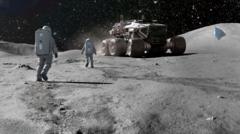
Helium-3 mining moon operations represent one of the most ambitious scientific endeavors of our time. This rare isotope, virtually non-existent on Earth, exists in significant quantities beneath the lunar surface and has become increasingly valuable for both energy production and scientific applications worldwide.
Helium-3 is a stable isotope of helium containing two protons and one neutron in its nucleus. Unlike its more common counterpart Helium-4, this lighter variant possesses remarkable properties that make it extraordinarily valuable for next-generation fusion reactors and other advanced technological applications. The stark difference in availability between Earth and the moon has sparked serious discussions among scientists and entrepreneurs about establishing lunar extraction operations.
Why Demand for Helium-3 is Skyrocketing
The market projections for Helium-3 mining moon initiatives show dramatic growth over the coming decades. Current estimates suggest that global demand for this critical isotope will multiply several times over as fusion energy technology advances and becomes commercially viable. Major research institutions and private space companies have begun allocating substantial resources toward understanding how to access and extract this valuable resource efficiently.
Energy experts emphasize that Helium-3 could serve as a game-changing fuel source for clean fusion reactors. A single ton of lunar Helium-3 contains as much energy as millions of barrels of oil, making the economic case for moon mining extraordinarily compelling. This dramatic energy density differential has captured the attention of governments, corporations, and investors worldwide who recognize the transformative potential of this isotope.
Lunar Deposits and Distribution
Scientific analysis of moon samples brought back by Apollo missions revealed that Helium-3 exists throughout the lunar regolith, with particularly rich concentrations in certain regions. The moon's surface has accumulated this isotope for billions of years through solar wind bombardment, creating deposits that dwarf any terrestrial sources. Geologists estimate that the lunar surface contains millions of tons of this valuable resource, enough to supply Earth's energy needs for centuries under aggressive fusion development scenarios.
Regional variations in Helium-3 concentration mean that lunar mining operations would likely focus on specific locations where extraction becomes economically viable. The distribution patterns suggest that equatorial regions and certain crater formations possess the highest concentrations, making them prime targets for future mining infrastructure development.
Technological Challenges in Helium-3 Mining Moon Operations
Extracting Helium-3 from lunar soil presents unprecedented engineering challenges. The isotope exists at extremely low concentrations within the regolith, requiring massive volumes of material processing to yield meaningful quantities. Current technology would need significant advancement to make lunar extraction financially viable compared to alternative energy solutions.
Temperature variations on the moon swing between extreme heat and cold, creating harsh conditions for equipment operation. Mining machinery would need revolutionary designs incorporating advanced materials capable of withstanding these environments while maintaining operational efficiency. Additionally, the lower gravity on the lunar surface affects how equipment behaves, requiring completely new engineering approaches for excavation, transport, and processing systems.
Economic Considerations and Cost Analysis
The economics of Helium-3 mining moon projects remain highly speculative at present. Current estimates suggest that establishing the initial infrastructure for extraction could require investments measured in tens of billions of dollars. Transportation costs back to Earth represent another significant expense factor that engineers and economists continue to analyze.
However, proponents argue that once infrastructure reaches operational maturity, the cost per unit of Helium-3 could eventually become competitive with other premium energy sources. The extraordinary energy content of lunar Helium-3 means that relatively small quantities by weight could justify the enormous transportation expenses associated with moon-to-Earth delivery operations.
Current Plans and Future Prospects
Several space agencies and private companies have begun serious planning for Helium-3 mining moon missions. China, the United States, and European space organizations have all incorporated lunar resource extraction into their long-term space exploration strategies. Private space companies, including those developing reusable rocket technology, view Helium-3 extraction as a potentially lucrative business opportunity in the distant future.
The timeline for commercially viable Helium-3 mining moon operations remains uncertain, with most experts projecting that large-scale extraction would not begin for at least twenty to thirty years. This extended timeframe reflects both the technological challenges involved and the need for substantial advances in fusion reactor technology to justify the enormous investment requirements.
Conclusion
Helium-3 mining moon operations represent a fascinating frontier in both space exploration and energy production. While significant technological and economic obstacles remain, the potential rewards have inspired substantial research investments and ambitious planning across multiple space agencies and corporations. As fusion technology advances and space infrastructure becomes increasingly sophisticated, extracting this rare isotope from the lunar surface could eventually transform global energy systems.


