Feral Children: Why Kids Need Freedom to Explore
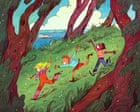
Understanding Feral Children and Modern Childhood
The concept of feral children has become increasingly relevant in contemporary discussions about parenting and child development. Feral children, often characterized as those given considerable freedom to explore their environments without constant adult supervision, represent a departure from helicopter parenting culture. Adults frequently demand that children occupy more meaningful space in society, yet paradoxically, those same adults often reprimand young people for being loud, active, or visibly present in public spaces. This contradiction reveals deeper tensions about how we truly value childhood independence and freedom.
Island Life and the End of Childhood
Consider the reality of growing up on Peaks Island, a small Maine community situated approximately 3 miles off the coast of Portland, accessible exclusively by boat. Residents who establish permanent year-round homes on this island experience a uniquely structured transition into adolescence. The island maintains an elementary school serving younger children, yet lacks middle and high school facilities. Consequently, once island children reach sixth grade, they embark on a significant journey—a daily ferry commute to mainland educational institutions. This geographical circumstance transforms what might otherwise be a gradual maturation process into a clearly defined rite of passage.
The Ferry Commute as Coming-of-Age
The 7:15 AM ferry departure becomes more than mere transportation logistics; it symbolizes the boundary between protected childhood and emerging adolescence. For Peaks Island youth, catching that ferry represents independence in its most tangible form. These young people navigate complex social environments, manage time independently, and demonstrate responsibility far earlier than many mainland peers. The feral children of isolated communities often develop resilience through necessity, acquiring practical skills and emotional maturity that extend beyond what traditional suburban childhoods typically provide.
Freedom Versus Oversight in Child Development
Research increasingly suggests that feral children—those afforded genuine freedom to explore, make mistakes, and learn through direct experience—develop stronger problem-solving abilities and greater self-confidence. The restrictions placed on contemporary childhood through constant parental monitoring and structured activities may inadvertently hinder natural development. Feral children benefit from unsupervised play, environmental exploration, and the freedom to navigate social situations independently. These experiences build competence and agency that supervised, adult-directed activities cannot replicate.
Society's Contradictory Demands on Young People
Modern society presents conflicting messages to children and adolescents. Parents and policymakers insist that young people should contribute meaningfully to their communities and demonstrate independence. Simultaneously, society imposes unprecedented restrictions on children's autonomy. Public spaces increasingly exclude unaccompanied youth; neighborhoods discourage unsupervised play; schools limit recess and outdoor exploration. This paradox leaves feral children—those given genuine freedom—as anomalies rather than the norm.
The Value of Unstructured Childhood Experiences
Communities like Peaks Island inadvertently preserve something increasingly rare: authentic childhood experiences characterized by genuine freedom. When feral children roam forests, navigate water access challenges, and manage independent travel, they accumulate practical knowledge and emotional resources. They learn that they are capable, that failure is survivable, and that adults are not omnipresent validators of their choices. These lessons prove invaluable throughout adolescence and adulthood, contributing to psychological resilience and self-directed decision-making capabilities.
Reimagining Childhood in Modern Communities
The existence and success of feral children in island communities and similar settings challenges conventional wisdom about supervision and protection. While safety remains important, the pendulum has swung too far toward constant oversight. Young people deserve opportunities to be bored, to make minor mistakes in low-stakes environments, and to discover their own capacities for navigation and problem-solving. Communities that facilitate rather than restrict childhood independence may ultimately produce more competent, confident adults than those focused exclusively on risk elimination.
The conversation about feral children ultimately reflects broader questions about what we genuinely value in human development. If we believe independence matters, we must create space for it. If we claim to want capable young people, we must tolerate the messiness of genuine childhood freedom. The 7:15 AM ferry on Peaks Island continues to carry island children toward their futures, each commute reinforcing lessons that overprotected peers may never learn.