Far-Right Religious Leaders Advising Trump See Iran as an End Times Holy War
In recent years, the relationship between the United States and Iran has been tense, to say the least. The two countries have a long history of political and ideological differences, and these tensions have only been exacerbated by the current administration's aggressive stance towards Iran. However, what many people may not realize is that this conflict has taken on a new dimension – one that is deeply rooted in religion.
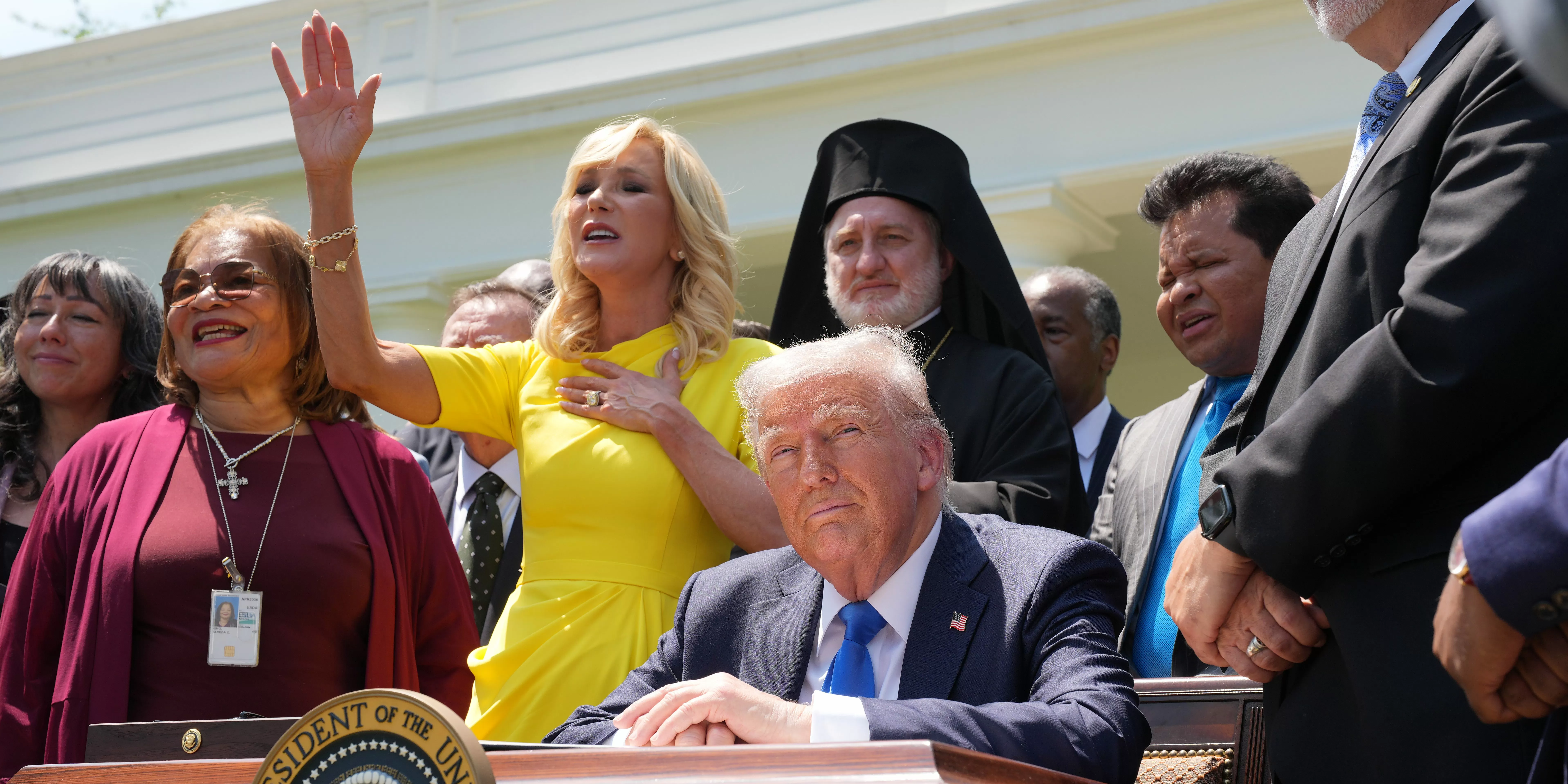
President Trump's spiritual advisors, who are known for their far-right beliefs, have been pushing for a religious crusade against Iran. They see this conflict as a holy war, one that is necessary for the fulfillment of biblical prophecies and the ushering in of the end times. This dangerous and misguided ideology is not only fueling the flames of war, but it is also making it much more difficult to find a peaceful resolution.
The idea of a religious crusade against Iran is not a new one. In fact, it has been brewing for decades, with some evangelical leaders even calling for a military strike on Iran as early as 2005. However, with the rise of the Trump administration, these voices have become louder and more influential. Trump's spiritual advisors, such as Robert Jeffress and John Hagee, have been vocal in their support for a military intervention in Iran, citing biblical justifications for their stance.
This dangerous rhetoric has not gone unnoticed by the Iranian government. In response, they have also begun to frame the conflict as a religious one, with Iranian leaders portraying themselves as defenders of Islam against the "Christian crusaders." This only serves to further escalate tensions and make it more difficult to find a peaceful resolution.
But what is truly concerning is the fact that this religious crusade is being pushed by individuals who have the ear of the President of the United States. These are not just fringe figures, but influential leaders who have the power to shape the administration's policies. And their beliefs are not just limited to Iran – they see the entire Middle East as a battleground for their religious crusade.
This is a dangerous and misguided approach to foreign policy. By framing the conflict with Iran as a religious one, Trump's spiritual advisors are not only ignoring the complex political and historical factors at play, but they are also disregarding the potential consequences of their actions. A military intervention in Iran would have devastating consequences, not just for the region but for the entire world.
Furthermore, this religious crusade is not only harmful in terms of foreign policy, but it also goes against the very principles of religious tolerance and freedom that the United States was founded upon. The idea of using religion as a justification for war is antithetical to the values of a secular democracy. It also undermines the efforts of religious leaders who have been working towards promoting peace and understanding between different faiths.
It is time for the Trump administration to step back from this dangerous path and instead focus on finding a diplomatic solution to the conflict with Iran. This can only be achieved through open and honest dialogue, not through the lens of religious ideology. The United States must also recognize the role it has played in contributing to the current tensions and take responsibility for its actions.
In conclusion, the idea of a religious crusade against Iran is not only misguided but also dangerous. It is time for Trump's spiritual advisors to put aside their apocalyptic beliefs and instead work towards finding a peaceful resolution to the conflict. The world is watching, and it is up to the United States to show that it is a responsible and rational global leader, not one driven by religious fervor.